
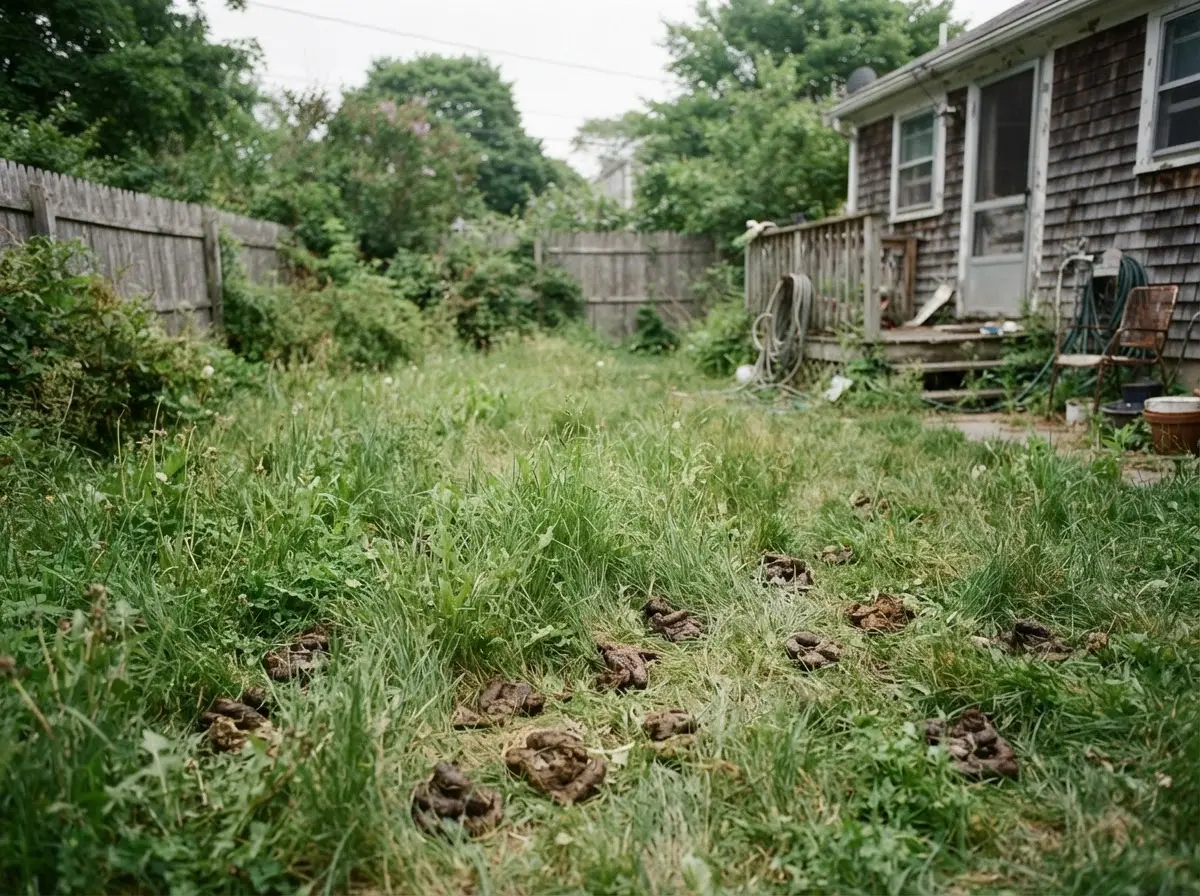
Dog Poop and Ticks in New England Yards
Dog poop does not directly produce ticks, but it attracts the rodents that carry them. Mice and rats drawn to accumulated dog waste are common hosts for tick larvae and nymphs. In New England, where tick-borne illness is a serious concern, keeping your yard free of dog waste is one way to reduce tick exposure.
Here is the connection between dog waste and ticks, why it matters in New England, and what you can do about it. For specific health concerns, talk to your doctor or veterinarian.
Key takeaways
- Dog waste attracts mice and rats, which are primary hosts for tick larvae and nymphs.
- New England has high rates of tick-borne illness, making rodent control important.
- Removing dog waste eliminates a food source that keeps rodents in your yard.
- Keeping grass trimmed and removing brush also reduces tick habitat near waste areas.
The Connection Between Dog Waste and Ticks
The link is indirect but real. Dog waste left in a yard attracts rodents, particularly mice and rats, because it contains undigested protein they can eat. These rodents are primary hosts for the early life stages of ticks. Tick larvae and nymphs feed on mice, and when those mice are drawn to your yard by dog waste, they bring ticks with them.
Once ticks are in your yard, they do not stay on the mice. They drop off and wait on tall grass and brush for the next host to walk by, which could be you, your children, or your pets. The more rodents in your yard, the more ticks.
This is a particular concern in New England, where the blacklegged tick, also known as the deer tick, is common. These ticks can carry Lyme disease and other illnesses. Reducing the rodent population in your yard is one way to reduce your exposure.
Why New England Yards Are at Higher Risk
New England has some of the highest rates of tick-borne illness in the country. The combination of wooded suburbs, abundant wildlife, and a climate that supports tick activity for much of the year creates ideal conditions for tick populations.
In Central Massachusetts, ticks are active from early spring through late fall. They are most active in humid conditions and in areas where lawn meets woods or tall grass. A yard with accumulated dog waste near the tree line is an ideal scenario for attracting rodents and, by extension, ticks.
If you live in a wooded area in towns like Hubbardston, Westminster, or Gardner, the risk is even higher. Keeping the yard clean and the grass trimmed are both important steps.
How to Reduce Tick Risk in Your Yard
Start by removing dog waste regularly. Without the food source, rodents have less reason to come into your yard, and fewer rodents means fewer ticks. Weekly waste removal is the most practical way to break the cycle.
Keep grass trimmed and remove leaf litter and brush from the edges of your yard, especially where the lawn meets woods. Ticks wait on tall grass and brush for hosts to walk by, so keeping those areas clear reduces the places ticks can hide.
Create a buffer zone between your lawn and any wooded areas using wood chips or gravel. This makes it harder for ticks to migrate from the woods into the part of the yard where your family spends time.
Weekly dog waste removal from Scoop A Lot handles the waste side of the equation. Check our service areas to see if we cover your town, or read about how dog poop attracts rats to understand the rodent connection in more detail.
Frequently Asked Questions
Does dog poop attract ticks?
How do I reduce ticks in my yard in New England?
Are ticks a problem in Central Massachusetts?
Can dog waste in my yard increase my risk of Lyme disease?
Related
- See pricing — weekly service starts at $125/month, with a free first cleanup.
- Weekly Dog Waste Removal — Best for steady, low-stress yard maintenance.
- Dog waste removal in Gardner, MA — see service details, pricing, and FAQs for Gardner.
- All service areas — check whether Scoop A Lot covers your town.
- Contact Scoop A Lot — request a quote for your yard, dogs, and schedule.
Ready for a cleaner yard?
Get a simple quote from Scoop A Lot and choose a cleanup schedule that fits your dogs, your yard, and your budget.