
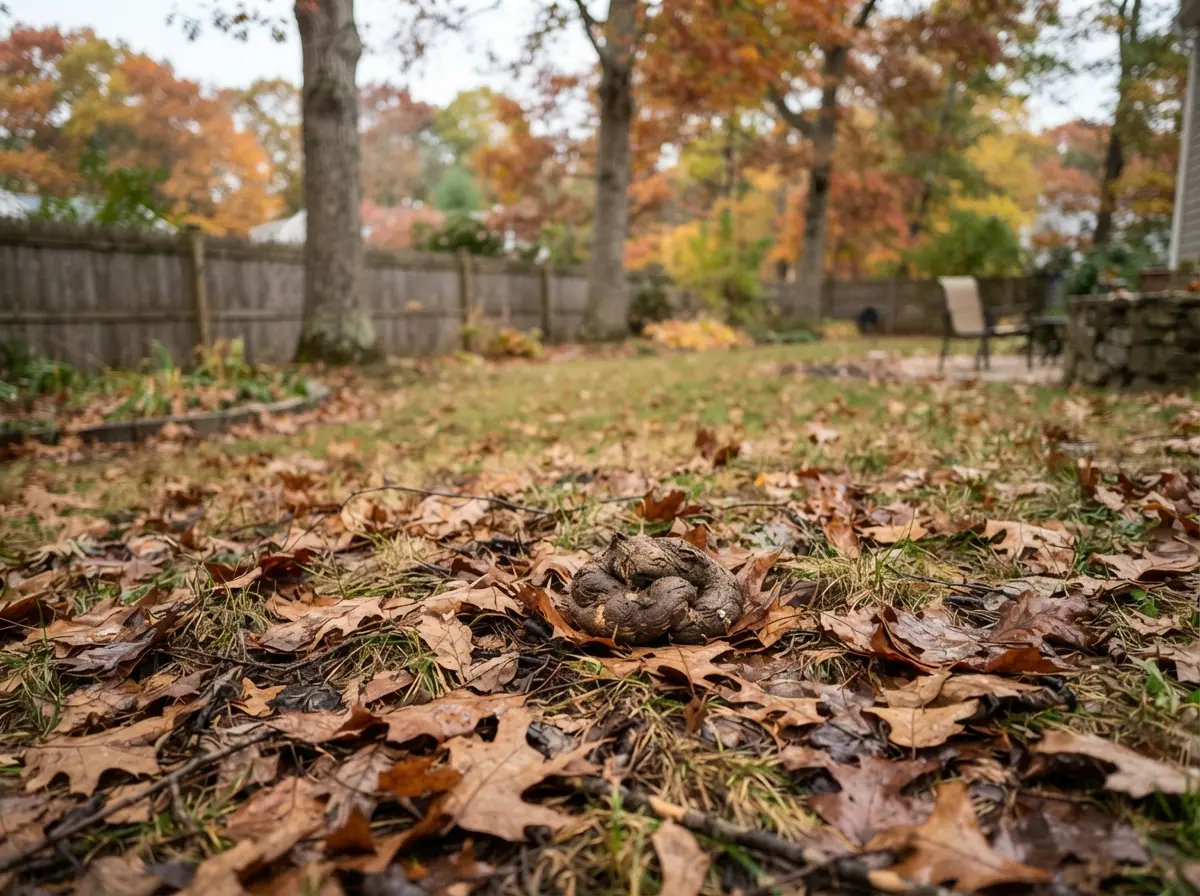
How Long Does Dog Poop Take to Decompose?
Dog poop takes roughly two months to decompose in warm weather, and in a Massachusetts winter it may not break down at all. Cold temperatures freeze the waste in place, and the bacteria that would normally break it down go dormant.
That means waste left in your yard in November can still be there in April. Here is how the decomposition process works, what slows it down, and why waiting for it to disappear on its own is not a good plan.
Key takeaways
- Dog waste takes about two months to decompose in warm weather.
- In cold Massachusetts winters, decomposition effectively stops and waste freezes in place.
- Rain and heat speed up breakdown, but they do not remove the bacteria and parasites left behind.
- Even after visible waste decomposes, pathogens can persist in the soil for months.
The Decomposition Timeline
In warm, moist conditions, dog waste begins to break down within a week. Bacteria and insects start working on it, and over the course of several weeks the pile shrinks and darkens. Full decomposition to the point where the waste is no longer visible takes roughly two months.
That timeline assumes ideal conditions: warm temperatures, regular rain, and soil with active microbial life. In practice, most New England yards do not offer those conditions year-round. Summer heat helps, but dry spells slow things down. And once temperatures drop in late fall, the process nearly stops.
The waste you see on your lawn is only part of the problem. Even after the visible pile breaks down, the bacteria, parasites, and excess nutrients remain in the soil. Those contaminants do not disappear with the pile.
Why Winter Stops Decomposition
In Massachusetts, the ground freezes from December through March. When temperatures drop below freezing, the bacteria that break down waste go dormant. The waste itself freezes solid and sits on or in the soil until the spring thaw.
This is why so many homeowners discover a yard full of old waste in April. Everything deposited over the winter is still there, preserved by the cold. A thorough spring cleanup is usually needed to reset the yard before the growing season starts.
If you want to avoid the spring scramble, keeping up with weekly removal through the winter is the answer. The waste does not go away on its own, and the longer it sits, the more it damages the lawn underneath.
Why You Should Not Wait for It to Decompose
Waiting for dog waste to decompose naturally means living with a yard that is unsafe and unpleasant for months. During that time, the waste is burning your grass, attracting flies, and producing odor. Children and other pets can come into contact with it.
Decomposition also does not remove the health risk. Parasites and bacteria in dog waste can persist in the soil long after the visible waste is gone. Roundworm eggs, for example, can survive in soil for months. Giardia cysts can remain infectious in cool, moist conditions.
The simplest way to deal with dog waste is to remove it promptly. Weekly service from a pooper scooper service keeps your yard clean and safe without you having to think about it. You can learn more about how often you should scoop your yard to find the right schedule.
Frequently Asked Questions
How long does it take for dog poop to decompose?
Does dog poop dissolve in the rain?
Does dog poop decompose in winter?
Is it safe to leave dog poop in the yard to decompose naturally?
Related
- See pricing — weekly service starts at $125/month, with a free first cleanup.
- Weekly Dog Waste Removal — Best for steady, low-stress yard maintenance.
- Dog waste removal in Hubbardston, MA — see service details, pricing, and FAQs for Hubbardston.
- All service areas — check whether Scoop A Lot covers your town.
- Contact Scoop A Lot — request a quote for your yard, dogs, and schedule.
Ready for a cleaner yard?
Get a simple quote from Scoop A Lot and choose a cleanup schedule that fits your dogs, your yard, and your budget.